

Introduction
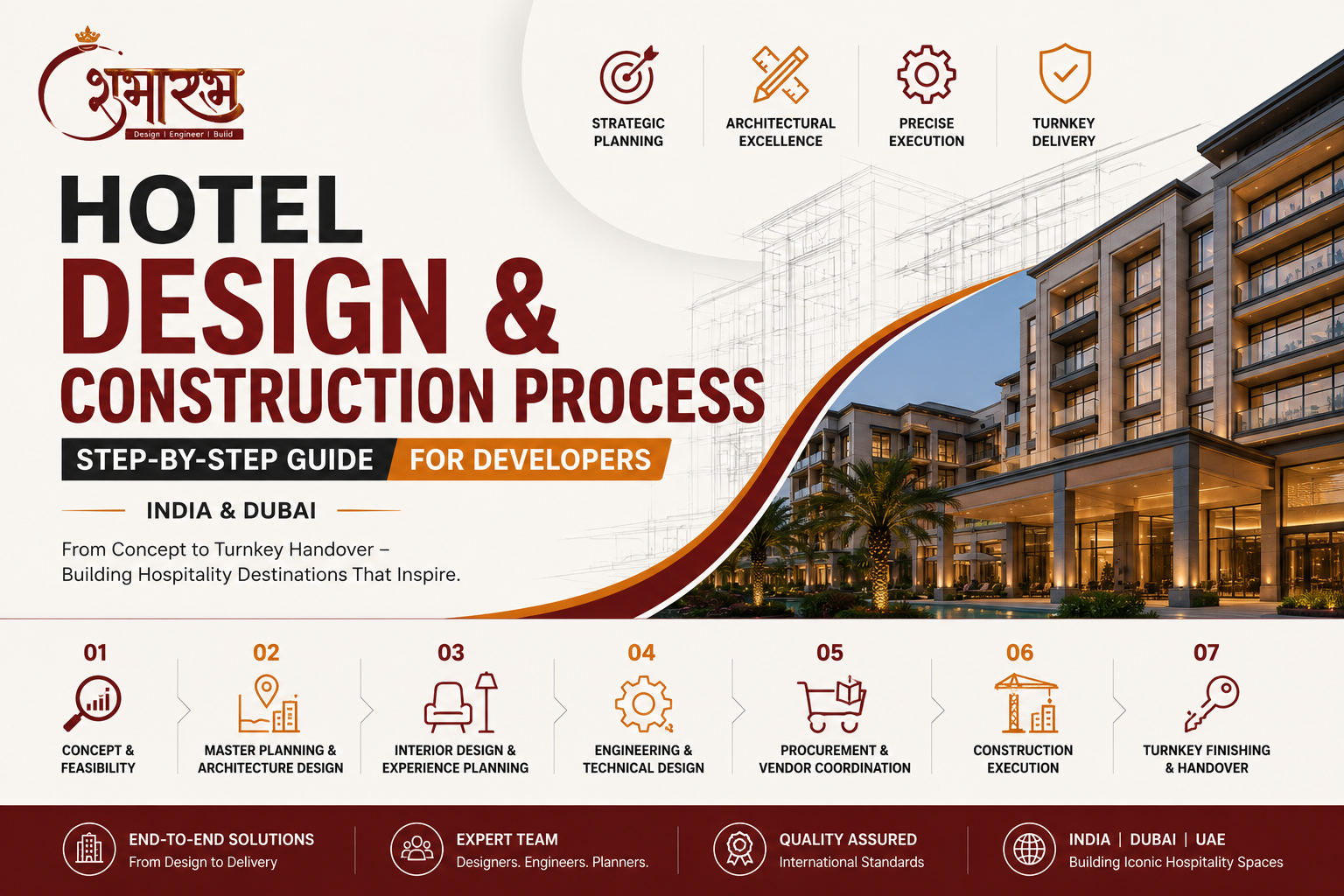
Hotel development is a high-investment, high-precision process that requires strategic planning, architectural excellence, and flawless execution. Unlike standard construction projects, hospitality developments must align design aesthetics with operational efficiency, guest experience, and international brand standards.
This guide outlines the complete hotel design and construction process followed by professional hospitality design firms in India and Dubai.
Phase 1: Concept Planning & Feasibility
Every successful hotel begins with a strong concept backed by feasibility analysis.
Key considerations:
- Location analysis and accessibility
- Target audience (luxury, business, resort, boutique)
- Market demand and competitor benchmarking
- Land utilization and zoning regulations
At this stage, developers define the vision, budget range, and project scale.
Phase 2: Master Planning & Architecture Design
This phase transforms the idea into structured architectural layouts.
Includes:
- Site master planning
- Space programming (rooms, lobby, F&B, amenities)
- Circulation flow design
- Structural planning
Architects ensure:
- Efficient guest movement
- Operational flow for staff
- Maximum land utilization
Phase 3: Interior Design & Guest Experience Planning
Hospitality interiors directly impact guest perception and revenue.
Key elements:
- Lobby experience design
- Guest room layouts
- Lighting and ambiance planning
- Material selection (stone, wood, metals)
- Brand identity integration
Luxury hotels focus heavily on:
- Sensory experience
- Visual storytelling
- Comfort and durability
Phase 4: Engineering & Technical Design (MEP)
This is one of the most critical phases in hotel construction.
Includes:
- Mechanical systems (HVAC)
- Electrical load planning
- Plumbing systems
- Fire safety compliance
- Acoustic engineering
Poor MEP planning leads to:
- High operational costs
- Guest discomfort
- Maintenance issues
Phase 5: Procurement & Vendor Coordination
Material and equipment procurement determines project quality and timelines.
Includes:
- Vendor selection
- Material sourcing
- Cost optimization
- Logistics management
High-end hospitality projects require:
- Custom fabrication
- Imported materials
- Precision quality control
Phase 6: Construction Execution
This is where design becomes reality.
Key focus areas:
- Structural construction
- Facade development
- Interior execution
- Landscape integration
Professional firms ensure:
- Timeline adherence
- Quality supervision
- Safety compliance
Phase 7: Turnkey Finishing & Handover
Final stage includes complete project delivery.
Includes:
- Furniture, fixtures & equipment (FF&E)
- Final quality checks
- Staff training support
- Soft launch preparation
Turnkey execution ensures:
- Single point of responsibility
- Faster delivery
- Reduced coordination issues
Why End-to-End Execution Matters
Fragmented execution leads to delays, cost overruns, and design inconsistencies.
A unified approach ensures:
- Seamless coordination
- Consistent quality
- Faster project completion
- Better ROI for developers
Conclusion
Hotel design and construction is not just about building infrastructure—it is about engineering a complete guest experience. From concept to commissioning, every phase must align with operational efficiency, luxury standards, and long-term sustainability.
Developers in India and Dubai increasingly prefer turnkey execution models to ensure precision, speed, and global-quality outcomes.